The Kidneys and NEC
Every organ in the body is interconnected and works together. When a baby develops NEC, the inflammation in the intestine may alter blood flow in the body and affect other organs, including the kidneys.
Micah
Necrotizing enterocolitis (NEC) is a devastating intestinal disease that can affect premature and medically fragile infants during their first weeks and months of life. NEC can also affect term babies, especially infants with a medical condition, like a congenital heart disease (CHD). NEC can cause severe inflammation and infection that extend far beyond the baby’s intestine.

Every organ in the body is interconnected and works together.
When a baby develops NEC, the inflammation in the intestine may alter blood flow in the body and affect other organs, including the kidneys. Sometimes babies develop acute kidney injury (AKI) after being diagnosed with NEC. AKI happens when there is a sudden decline in kidney function, meaning that the kidneys cannot filter waste or maintain fluid balance. Approximately 30-60% of infants who develop NEC also experience AKI, and half of those babies go on to develop severe AKI, which can be life-threatening.
Common Terms with NEC-related Acute Kidney Injury
Gut Microbiome
The community of bacteria in the infant’s intestines.
Dysbiosis
An unhealthy imbalance of gut bacteria. Preterm infants can develop dysbiosis from antibiotic exposure, birth delivery, type of feeding, and other environmental factors. Dysbiosis can increase the risk of NEC.
Intestinal Permeability (“Leaky Gut”)
Premature infants often have immature gut barriers, making them more vulnerable to bacterial toxins and inflammatory signals entering their bloodstream, triggering inflammation in multiple organs including the kidneys.
Bacteremia
The presence of bacteria in the bloodstream
Sepsis
When bacteria enter the bloodstream, the body may trigger an overwhelming immune response that can lead to sepsis, a life-threatening condition that can cause multiple organs to lose their ability to function normally.
Uremia
In AKI, the kidneys struggle to filter out normal bodily waste, causing a buildup of waste products, also called uremic toxins, in the bloodstream.
How NEC Impacts Kidneys
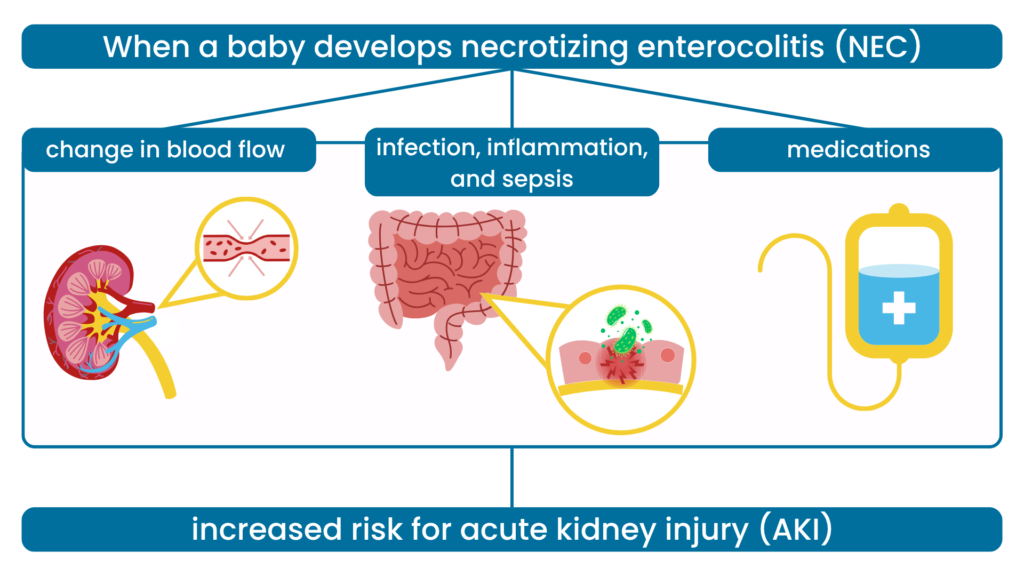
- Change in Blood Flow to the Kidneys
- As pressure inside the abdomen rises from gut inflammation caused by NEC, blood vessels are compressed, and the body shifts blood flow patterns. As a result, the kidneys may receive less blood. If normal blood flow is not restored quickly, the kidneys can be damaged, which can increase a baby’s risk of developing AKI after NEC. Dehydration and low blood pressure can also occur in NEC and cause decreased blood flow to the kidneys.
- Infection, Inflammation, and Sepsis
- When NEC progresses, it can weaken the gut wall and even cause a hole (perforation) to develop, allowing bacteria from the intestine to enter the bloodstream. This can trigger a whole-body inflammatory response (sepsis), which can increase a baby’s risk of developing AKI after NEC.
- Medications
- Treatment for NEC often requires medications, including a wide range of antibiotics and blood pressure medicines. While these can be life-saving and essential for treatment, some medications are filtered through the kidneys and can add extra stress to an infant’s delicate, developing kidney tissue. These medications may be referred to as “nephrotoxic” and can also increase a baby’s risk of developing AKI after NEC.
How NICU Teams Monitor Kidney Function:
Diagnosing AKI in premature babies can be difficult. To keep a close eye on kidney health, the NICU team monitors:
Serum Creatinine
A waste product measured in the blood that comes from muscle. Rising creatinine levels indicate that the kidneys are not filtering waste efficiently.
Urine Output
Careful monitoring of diaper weight for urine production helps assess fluid balance. Some babies may require catheters to more closely monitor how well the kidneys are producing urine.
Electrolytes, Fluid Balance, & Blood Pressure
Tracking sodium, potassium, fluid levels, and blood pressure is a critical part of monitoring how well the kidneys are functioning.
Other
The following are not widely available or used in all NICUs. Large academic centers may also monitor:
Urinary NGAL: Neutrophil gelatinase-associated lipocalin (NGAL) is a promising early biomarker of neonatal AKI, particularly in preterm infants and newborns with perinatal asphyxia. It can rise even before serum creatinine changes, potentially identifying tubular injury earlier. It is available clinically; one challenge is that it can also rise in the presence of inflammation which may make it difficult to interpret the results in infants with NEC.
Cystatin-C level: This is a better indicator of kidney function than serum creatinine, because it does not come from muscle, which is usually low in preterm infants. However, the test is not yet as readily available, and it requires a large blood volume for preterm infants. A rising Cystatin-C level indicates worsening kidney function.
What Parents Can Do:
Parents are an essential part of their baby’s care team. Clinicians should explain test results and provide parents with regular updates. Parents should be encouraged to ask questions and engage as active members of their child’s care team. Clinicians and parents should talk about:
- How the baby’s kidney health is being monitored
- Changes in the baby’s weight and daily fluid balance
- How to help the baby maintain a healthy blood pressure
- Changes in the baby’s electrolytes and test results, including: serum sodium, potassium, and acid balance
- If or when a nephrologist (a kidney specialist) can be consulted
- If there is a need to see a nephrologist after being discharged from the hospital
Resources
Our partners at the Neonatal Kidney Collaborative (NKC) are working hard to improve the health of newborns with or at risk for kidney disease through collaborative research, advocacy, and education.